
By Catherine Perez-Shakdam – Executive Director Forum for Foreign Relations first published in https://forumforforeignrelations.org/blog/f/the-war-beneath-the-war
What looks like a sudden eruption of force is the culmination of a shift decades in the making. For years, the Islamic Republic built a system designed to shield itself from direct retaliation. Its strategy relied on distance and deniability: proxy militias, missile forces operated through intermediaries, ideological networks embedded across fragile states. Hezbollah in Lebanon, the Houthis in Yemen, Iranian-backed militias in Iraq and Syria. Together they created strategic depth, letting the regime exert pressure while insulating itself from consequence. The whole system rested on one assumption: that escalation could be managed without exposing the regime to decisive risk.
That assumption no longer holds.
The recent US–Israeli strikes damaged military infrastructure, but their deeper effect was to challenge the foundation of the regime’s deterrence: predictability. Iran’s strength was never conventional parity. It was the belief that its position was permanent, protected by layers of indirect influence, and that challenging its reach would carry unacceptable costs. By striking assets long considered secure, Washington and Jerusalem shattered that perception of permanence. They shifted from managing the regime’s expansion to actively constraining it.
The effects were immediate. Gulf states, long accustomed to balancing reliance on American protection with caution toward Iran’s proximity, began adjusting their posture. Their caution had always reflected uncertainty as much as threat. Would the United States act decisively if challenged? The strikes answered the question. They demonstrated both capability and willingness.
Alignment is no longer theoretical. It is taking operational form.
Saudi Arabia stands at the centre of this shift. Its geographic depth, military infrastructure, and political weight position it as the anchor of a new security framework. Riyadh has moved from cautious accommodation of Iranian influence toward active integration with Western and regional defence structures. Missile defence coordination, intelligence sharing, and military cooperation are all expanding, and the trajectory points toward further deepening, not reversal.
Qatar presents a different case. While it hosts American military infrastructure, its broader political conduct places it outside the emerging alignment. For years, Doha pursued a dual strategy: benefiting from Western security guarantees while maintaining close political and financial ties with Islamist movements, including Hamas and Muslim Brotherhood networks. This posture allowed Qatar to exercise influence beyond its size. It also undermined trust among its neighbours and partners.
That ambiguity now carries consequences. Military planners cannot assume the long-term reliability of basing arrangements in environments shaped by competing loyalties. The repositioning of sensitive assets away from Qatar reflects this reality in operational terms. Military infrastructure is being consolidated in locations defined by political alignment and strategic reliability.
Security guarantees now follow alignment, not habit.
This reflects a broader shift in how deterrence works. Symbolic presence no longer suffices. Deterrence depends on integration: shared intelligence, interoperable defence systems, forward-positioned capabilities. The emerging structure is designed to limit threats before they materialise, rather than respond after they strike.
If military deployments shape deterrence on the surface, energy flows determine its durability. Oil revenue has long funded Tehran’s missile programmes, sustained its proxy networks, and stabilised its domestic economy. Despite sanctions, Iran maintained exports through covert shipping networks and intermediary traders. China became its principal buyer, purchasing the majority of its crude at discounted prices.
The arrangement depends on uninterrupted transport.
The Strait of Hormuz remains one of the world’s most critical chokepoints. A significant portion of global oil supply passes through it. Any disruption affects shipping behaviour, insurance costs, and energy prices immediately. The recent escalation introduced precisely this uncertainty. Tankers delayed transit. Insurance premiums climbed. Shipping routes are being reassessed.
No formal blockade was imposed. None was necessary.
Uncertainty alone alters behaviour. It increases costs, weakens reliability. Iran’s oil continues to flow, but under conditions that reduce its strategic value. China continues to purchase, but at increased risk and cost.
Meanwhile, a quieter transformation is underway.
New trade corridors are being constructed to link India, the Gulf, Israel, and Europe. The India–Middle East–Europe Corridor is the clearest example. Goods move from India to Gulf ports, then by rail through Saudi Arabia and Jordan into Israel’s Mediterranean ports, onward to Europe. These routes combine shipping, rail, energy pipelines, and digital infrastructure.
They also create shared interests. Countries connected by infrastructure acquire a stake in each other’s stability. Disruption becomes costly for all participants.
Israel now sits at the centre of this emerging network. Its ports, rail connections, and digital infrastructure position it as a transit hub linking Asia, the Middle East, and Europe. Its stability is no longer a purely national concern. Every country connected to these routes has a material interest in its security.
Economic integration reinforces deterrence.
Military threats do not vanish. But incentives change. Stability becomes economically valuable. Instability becomes expensive.
These developments weaken the strategic model that has governed the region since 1979, a model built on proxy warfare, power projection without direct confrontation, escalation without exposure.
That model is under strain.
Infrastructure is beginning to replace ideology as the foundation of influence. Trade routes, energy systems, and defence integration shape strategic relevance. Militias operating outside these systems lose leverage. Their presence becomes a burden rather than an asset.
This creates pressure within Iran itself.
It is worth distinguishing between Iran as a nation and the Islamic Republic as a regime. Iran is an ancient civilisation whose people and history extend far beyond the revolutionary government that seized power in 1979. The current confrontation is with that regime, which has prioritised ideological expansion over national prosperity.
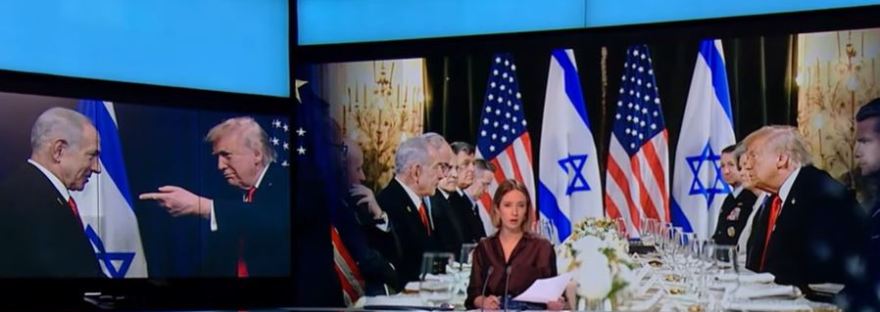
The strategy pursued by President Donald Trump and Prime Minister Benjamin Netanyahu recognised this distinction. Their objective was to weaken the structures that allowed the regime to project power beyond its borders. By targeting proxy networks and limiting external reach, they sought to constrain the regime’s ability to sustain permanent instability.
This approach creates conditions under which Iran may eventually re-emerge as a sovereign nation aligned with its own long-term interests rather than revolutionary ideology.
China and Europe are also affected. China must now account for greater uncertainty in its energy supply. Europe faces a choice between active participation in the emerging system or gradual marginalisation. The trade routes and defence structures being built today will shape economic and strategic relationships for decades.
What is taking shape is structural, not episodic.
For decades, instability was embedded in the region’s political structure. Proxy warfare allowed regimes to exert influence without accountability. That structure is being replaced by one built on connectivity, integration, and shared economic interest.
This is the beginning of a post-proxy Middle East.
Conflict will not disappear. But its foundations are changing. Influence will increasingly follow infrastructure rather than ideology. Stability will be reinforced by shared economic systems rather than maintained solely by military force.
The Middle East is not descending into chaos. It is being reorganised.
The outcome will determine the future of the region and the balance of power across Eurasia.
Reassigning Military Presence and Conditional Alliances
What matters here is where Western forces are now positioned, and what those choices reveal about political trust. Military basing has never been purely logistical. It reflects confidence in the host. When that confidence shifts, deployments shift first. Political declarations follow later.
For years, Qatar benefited from the assumption that hosting Al-Udeid Air Base guaranteed its long-term strategic protection. The United States’ largest regional air installation created the appearance of permanence. It allowed Doha to pursue an independent foreign policy while treating American military presence as an automatic shield.
That assumption has been quietly revised.
In recent months, American and Israeli movements have followed a clear pattern. Critical assets are being shifted away from exposed locations and consolidated in areas offering greater depth, survivability, and political reliability. Satellite imagery and defence reporting confirm that key American air assets, including KC-135 and KC-46 aerial refuelling aircraft, E-3 Sentry AWACS surveillance platforms, and logistical support units, have been relocated into Saudi Arabia. Prince Sultan Air Base, deep inside Saudi territory, has re-emerged as a central operational hub. Expanded following the partial drawdown from Qatar in 2019, it now provides both reach and protection. Aircraft operating from there can cover the Gulf, Iraq, the Levant, and the Red Sea while remaining less vulnerable to immediate retaliation.
This redistribution unfolded gradually, without public confrontation or political rupture. The gradualism was deliberate. It preserved operational continuity while reducing structural dependence on Qatari territory. Qatar remained formally secure, but its strategic indispensability was quietly diminished.
Al-Udeid continues to function as a command centre. Its infrastructure remains intact. But the relocation of critical enabling assets, particularly refuelling aircraft, has altered its operational significance. Refuelling aircraft determine whether sustained air operations are possible. Without them, air power loses range, endurance, and flexibility. Moving those assets to Saudi Arabia ensures continuity while reducing exposure to political and strategic uncertainty.
This reflects a broader reassessment of risk.
For decades, Qatar pursued deliberate ambiguity. It hosted American military infrastructure while simultaneously maintaining political, financial, and diplomatic relationships with Islamist movements and actors aligned with Iran. Doha positioned itself as intermediary, patron, and diplomatic broker. The strategy allowed it to exercise influence beyond its size. It also created a contradiction: the same territory that hosted Western military power provided sanctuary and legitimacy to networks that undermined regional stability.
As long as Western forces depended heavily on Qatari basing, that contradiction was tolerated. Structural dependence limited freedom of action.
That constraint has been removed.
By relocating critical assets deeper into Saudi Arabia and reinforcing alternative basing arrangements, the United States and its partners have reduced their operational reliance on Qatar. The balance of leverage has changed. Strategic protection is no longer automatic. It is conditional.
Military planners have built a system in which operational continuity no longer depends on Qatari territory. This provides flexibility that did not previously exist. Strategic decisions can now be taken without structural constraint.
Naval deployments reinforce the same logic. The arrival of the USS Gerald R. Ford Carrier Strike Group in the eastern Mediterranean represents one of the clearest demonstrations of intent. The most advanced carrier in the US fleet, the Ford brings strike aircraft, missile defence systems, radar integration, and electronic warfare capability. Its accompanying cruisers and destroyers extend that reach. Together they form a mobile platform capable of projecting force while protecting critical partners.
Its proximity to Israel strengthens deterrence against Hezbollah, whose missile arsenal remains the most immediate conventional threat to Israeli population centres. It also shapes calculations across the wider region. Carrier strike groups do not require territorial presence to exert influence. Their mobility allows them to appear quickly, remain as long as necessary, and withdraw without political entanglement. Presence alone alters behaviour.
Saudi Arabia’s expanded role as a host for American assets reflects Riyadh’s own recalibrated position. For nearly a decade, the kingdom endured missile and drone attacks from Iranian-backed Houthi forces. The 2019 strike on the Abqaiq oil facility demonstrated how vulnerable critical infrastructure could be. Hosting American forces while remaining exposed to proxy attack was untenable.
That imbalance is being addressed. Saudi Arabia provides strategic depth, geographic protection, and political alignment. In return, its security concerns have become integral to the broader deterrence framework. The relationship has shifted from unilateral protection to reciprocal integration.
Gulf states are no longer passive recipients of security guarantees. Their territory, infrastructure, and political orientation now form part of a shared defence system.
For the Islamic Republic, this redistribution complicates its long-standing deterrence model. Its strategy depended on threatening fixed, predictable concentrations of Western military infrastructure. When those concentrations disperse, leverage declines. Targets become harder to reach. Retaliation becomes faster and more certain. Escalation becomes less controllable.
These movements also signal intent. Deterrence depends on visible readiness. The relocation of aircraft, the repositioning of naval power, the reinforcement of strategic bases: all communicate that escalation will not proceed uncontested.
Qatar now occupies a different position within this framework. Its leadership can no longer assume that hosting foreign military infrastructure guarantees permanent protection. The security environment has shifted from automatic assurance to conditional alignment.
This change does not require confrontation to be effective. Strategic systems rarely rely on dramatic rupture. They adjust quietly. Dependence is reduced. Alternatives are strengthened. Exposure increases gradually.
The United States and its partners have repositioned to ensure their regional security architecture rests on reliable foundations. Military geography has been redrawn accordingly. Critical assets now sit within aligned territory, protected by depth, integration, and shared interest.
This is preparation to prevent miscalculation, not preparation for imminent war.
By reducing vulnerability, dispersing risk, and strengthening integrated deterrence, the emerging structure limits the ability of hostile actors to operate in the shadows. It narrows the space in which ambiguity can be exploited.
The Middle East is witnessing the construction of a more deliberate security architecture, one in which protection is tied to alignment and influence follows integration.
The direction is clear. The implications will unfold over time.
Choking Off Iran’s Oil Leverage (and Pressuring China)
If military deployments shape deterrence in visible ways, control over energy flows determines whether that deterrence holds. In the Persian Gulf, oil is not simply a commodity. It is the foundation of fiscal stability, political authority, and strategic reach. Oil revenue finances Tehran’s missile development, underwrites its proxy networks, and cushions domestic unrest. Strip that revenue away and the regime’s ability to project power abroad while suppressing pressure at home narrows considerably.
Sanctions constrained Tehran but did not end its exports. The regime adapted with patience and ingenuity, relying on shadow fleets, falsified cargo documentation, ship-to-ship transfers, and opaque intermediaries to move crude beyond formal oversight. Over time, China became the principal destination.
Beijing now absorbs the overwhelming majority of Iran’s exports. The arrangement benefits both sides. Tehran secures steady revenue; Chinese refiners obtain discounted crude that supports industrial output and lowers input costs. Iranian barrels, sold below international benchmarks, give Chinese buyers a structural advantage.
The entire arrangement rests on one condition: uninterrupted transit.
The Strait of Hormuz, at its narrowest barely 21 miles across, carries roughly one-fifth of global oil supply. This geography makes it indispensable and inherently fragile. Any disruption, or the credible threat of one, alters market behaviour immediately. Shipping slows. Insurance premiums rise. Prices respond.
The recent escalation exposed how sensitive the system remains. Commercial traffic adjusted almost at once. Some tankers delayed departures. Operators reassessed Gulf routes. Insurers raised war-risk premiums. These were commercial calculations, not political gestures, but their strategic consequences are significant.
Here lies the sophistication of the American and Israeli approach.
No blockade was imposed. No formal interdiction declared. By reshaping the security environment through visible naval presence, force redistribution, and credible deterrent signalling, Washington and Jerusalem introduced enough uncertainty to alter behaviour across the energy system. They did not need to halt Iranian oil. They only needed to make it less reliable.
In energy markets, reliability is currency. Once doubt enters the equation, costs rise, buyers hesitate, shippers seek alternatives, supply chains adjust pre-emptively. The regime’s revenue stream becomes less predictable without a single tanker being seized.
China is uniquely exposed.
Large Chinese state-owned firms have historically avoided direct, high-profile transactions involving Iranian crude. Smaller independent « teapot » refiners have handled much of the trade instead. These refiners operate on narrow margins and depend on discounted, steady supply. Their tolerance for political risk is higher, but not unlimited.
When insurance costs rise, when transit becomes uncertain, when sanctions enforcement tightens or naval presence increases, the margin compresses. Alternative suppliers like Saudi Arabia, Iraq, and Russia are available, but rarely at the same discount. Substituting supply erodes the economic advantage.
This places Beijing in a constrained position. China has long benefited from balanced relations across the region, cultivating ties simultaneously with Tehran, Riyadh, Jerusalem, and Abu Dhabi, positioning itself as an economic partner rather than a security guarantor. That equilibrium allowed it to benefit from Middle Eastern energy without assuming responsibility for protecting it.
The current shift complicates that model.
As infrastructure corridors linking India, the Gulf, Israel, and Europe develop under Western security sponsorship, China faces a parallel architecture not shaped by its Belt and Road Initiative. Its access to discounted Iranian crude, meanwhile, depends on a maritime environment still dominated by Western naval power.
This is by design.
Rather than confronting China directly, the United States and Israel have targeted the system that makes the Iran–China energy relationship viable. They have demonstrated that control over sea lanes and regional security architecture remains decisive. Beijing is reminded that nearly 70 percent of its oil consumption arrives by sea, much of it through narrow passages beyond its direct control.
Iran’s leverage is weakened in parallel. The regime has long relied on the implicit threat that escalation in the Gulf would impose unacceptable costs on global markets. That threat loses potency when the regime’s own exports become vulnerable to uncertainty. Energy can only function as a weapon if the wielder’s revenue is secure.
This is the strategic inversion now underway.
Iran’s oil continues to flow. China continues to purchase it. But both operate under heightened risk, rising cost, and reduced certainty. The regime’s financial base becomes less stable. Its alliances grow thinner. Its ability to fund external expansion narrows.
The broader design is visible. By constraining revenue streams and tightening the security environment, Washington and Jerusalem are weakening the regime’s foundations without direct occupation or overt economic warfare. The objective is the exhaustion of a regime whose survival depends on external destabilisation.
A future Iran, freed from the ideological constraints of the Islamic Republic, would occupy a different position entirely. Integrated into emerging trade corridors, connected to Gulf capital and Western markets, relieved of sanctions, a Free Iran would be central to the new regional order rather than excluded from it.
The current approach is carefully sequenced. Military deterrence reshapes the map. Energy uncertainty tightens financial pressure. Infrastructure networks create alternative alignments. Allies are strengthened. Adversaries are isolated through structural pressure rather than dramatic rupture.
The flow of oil has not stopped. But it is no longer secure.
And as the regime’s resources narrow and its partnerships thin, the space for a different Iranian future begins to widen.
New Corridors, Not New Confrontations
The most consequential transformation now underway in the Middle East is the deliberate construction of a new economic and infrastructural order. Troop movements and naval deployments have drawn attention, but they represent only one layer. Beneath them, Washington and Jerusalem have shown a deeper understanding of how durable power is built and how adversaries are weakened: by reshaping the systems on which they depend, not only by confronting them directly.
Trade routes, railways, pipelines, and digital corridors are being designed to connect regions long divided by conflict. These systems realign incentives. They bind countries into shared economic structures in which stability becomes materially valuable and disruption becomes self-defeating. The aim is to replace a fragmented regional order, one that allowed proxy warfare and ideological expansion to flourish, with an integrated architecture in which influence flows through infrastructure rather than militias.
The India–Middle East–Europe Corridor (IMEC), announced in September 2023 by the United States, India, Saudi Arabia, the UAE, the European Union, and Israel, stands at the centre of this transformation. Its structure is straightforward. Goods originating in India move by sea to Gulf ports, particularly in the UAE and Saudi Arabia. Integrated rail networks carry cargo north through Saudi Arabia and Jordan into Israel’s Mediterranean ports, especially Haifa. From Haifa, maritime routes connect onward into Europe.
The corridor integrates maritime transport, rail, energy systems, and digital connectivity. Undersea cables will carry data alongside physical cargo. Planned hydrogen pipelines and electricity interconnectors will link energy markets. These networks create redundancy, resilience, and strategic independence from vulnerable chokepoints.
The design directly addresses vulnerabilities that adversaries have long exploited. The Suez Canal, through which roughly 12 percent of global trade passes, has proven susceptible to disruption: the accidental grounding of the Ever Given in 2021, deliberate attacks by Iranian-backed Houthi forces in the Red Sea. By creating alternative land-sea routes under friendly control, Washington and Jerusalem have reduced reliance on exposed maritime corridors.
The economic benefits are tangible. Transit times between India and Europe could fall by up to 40 percent. Faster transit lowers cost, improves reliability, strengthens supply chains. The strategic consequences run deeper. These corridors shift the geography of global trade away from zones dominated by Iranian proxies and toward routes secured by aligned states.
This is where Washington and Jerusalem’s approach is most revealing. They are reshaping the economic map itself, building systems that bypass hostile territory, weaken adversarial leverage, and create alliances grounded in shared prosperity and mutual dependence.
Israel’s position within this system illustrates the transformation clearly. Haifa is becoming a central node in a transcontinental trade network linking Asia, the Middle East, and Europe. As goods, energy, and data move through Israeli infrastructure, its stability becomes an economic interest shared by multiple states. Israeli security is no longer solely a military concern. It is an economic necessity embedded within global supply chains.
Saudi Arabia plays an equally critical role. Under Vision 2030, Riyadh is transforming itself from a hydrocarbon exporter into a logistics and infrastructure hub. Rail links running north from Gulf ports through Saudi territory form the backbone of this system. Saudi geography provides strategic depth and economic centrality. Its alignment strengthens both the corridor’s security and its durability.
The implications extend well beyond the Gulf. In the South Caucasus, new transport agreements between Armenia and Azerbaijan are reopening land routes closed for decades. These corridors link Central Asia to Turkey and onward into Europe. Regions once defined by isolation are being drawn into broader economic systems aligned with Western and regional stability.
India’s growing partnership with Israel reinforces the emerging order. Cooperation in defence, technology, and infrastructure aligns India with a corridor that reduces reliance on maritime routes exposed to instability. This strengthens India’s economic autonomy while integrating it into a system secured by American and Israeli strategic leadership.
The network also reshapes the balance of power with China. Beijing’s Belt and Road Initiative sought to place China at the centre of Eurasian connectivity. The emerging corridor system introduces a parallel architecture, anchored in American security guarantees and Israeli technological integration. China now faces a system it does not control, through which trade flows can bypass its influence while exposing its continued reliance on maritime energy routes secured by Western naval power.
This is containment through construction.
The same strategy weakens Iran’s position. Tehran’s influence depended heavily on controlling or threatening chokepoints and unstable transit regions. By building corridors that bypass Iranian proxies entirely, Washington and Jerusalem have reduced Tehran’s leverage without direct occupation or large-scale war. The regime’s ability to disrupt global trade matters less when trade flows around it.
Military force can destroy. Infrastructure reshapes reality. By building systems that reward alignment and isolate destabilising actors, Washington and Jerusalem are altering the region’s long-term trajectory.
Economic integration becomes a form of deterrence. States connected through shared infrastructure have incentives to protect stability. Disruption imposes mutual economic harm.
The Middle East is being transformed from a fragmented battleground into connective tissue linking continents. Influence follows trade routes, energy flows, and digital infrastructure. Military power remains essential, but it operates within a broader system designed to sustain stability.
Adversaries are being bypassed, outflanked, and structurally weakened. A new trade architecture is emerging, one that strengthens allies, reduces adversarial leverage, and reshapes the balance of power.
The European Reflex: Hesitation and Vulnerability
Europe now finds itself in a strategic environment it did not design but cannot afford to ignore. The United States and its regional partners have moved decisively, repositioning military assets, securing energy flows, constructing new trade corridors. Europe’s response has been slower and more cautious. That caution reflects institutional culture and internal division. It also carries mounting risk. As a new regional framework consolidates, Europe risks drifting from participant to observer.
At the institutional level, the European Union has reacted in familiar terms. Brussels has emphasised restraint, de-escalation, and dialogue. This instinct is rooted in Europe’s post-war experience, where integration and diplomacy replaced power politics as the basis of stability. That model worked within Europe. It is far less effective against actors who operate through indirect means: proxy forces, covert influence networks, deniable structures designed to stay below the threshold of conventional response.
Iran’s regional posture is the test case. Its influence relies on decentralised militias, political affiliates, ideological networks, and intelligence-linked operations, all structured precisely to evade traditional diplomatic pressure. They exploit hesitation.
Recognition of this reality is growing. The European Parliament’s resolution calling for the designation of the Islamic Revolutionary Guard Corps (IRGC) as a terrorist organisation reflects mounting concern. The IRGC is the regime’s primary external instrument, sustaining proxy groups in Lebanon, Syria, Iraq, and Yemen while cultivating influence networks that extend into Europe itself.
Acknowledgement has not translated into unified action. Within the EU, such measures require consensus. Some member states remain reluctant, citing legal complexity, diplomatic consequences, or fear of retaliation. The result is delay, precisely the environment in which indirect actors thrive.
The United Kingdom faces a similar crossroads. London has imposed sanctions on Iranian individuals and entities but stopped short of formally proscribing the IRGC. The argument is familiar: preserving diplomatic channels maintains flexibility. Flexibility without leverage, though, risks becoming passivity. Maintaining dialogue while adversaries recalibrate the regional order leaves Britain reacting rather than shaping outcomes.
The strategic environment is moving forward without waiting for European consensus. The United States, Israel, and regional partners are integrating air defence, redistributing force posture, tightening energy leverage, and constructing alternative trade routes designed to bypass instability. Military deterrence is being paired with economic architecture. Security and connectivity are being fused.
Europe risks being left behind on both fronts.
Externally, marginalisation would reduce Europe’s ability to shape developments that directly affect its security and economy. Trade corridors linking India, the Gulf, Israel, and Europe will define the next generation of supply chains. Participation alone does not confer influence. Those who secure routes, finance infrastructure, and underwrite security set the rules. If Europe does not engage strategically, it will consume the benefits of a system it had no hand in designing.
Internally, the risks are more immediate. Europe’s proximity to the Middle East ensures that instability rarely stays distant. The migration crisis of 2015 demonstrated how quickly external conflict reshapes domestic politics. More than one million arrivals in a single year strained border systems, intensified political polarisation, and altered electoral landscapes across the continent. The political consequences are still unfolding.
Security pressures follow similar pathways. When militant networks lose operational space in one region, they adapt and seek alternatives. Europe’s open borders, legal frameworks, and dense urban environments offer resilience but also opportunity for exploitation. Instability, if not contained near its source, tends to migrate.
Energy dependence adds another layer. Despite diversification efforts following the reduction of Russian gas imports, Europe remains reliant on external energy flows. Disruption in the Gulf would translate rapidly into higher prices, industrial strain, and political pressure. Energy markets transmit geopolitical risk directly into domestic stability.
The emerging connectivity corridors also present opportunity. Faster, more reliable trade links to India and the Gulf could strengthen European supply chains and reduce exposure to single chokepoints. Infrastructure requires security, though, and investors and insurers demand predictability. If Europe remains strategically ambiguous, it raises the risk premium attached to its own participation.
The broader question confronting Europe, and the United Kingdom in particular, is whether they intend to act as architects of the emerging order or as late adopters of decisions taken elsewhere. For decades, European security rested on American guarantees, allowing Europe to prioritise integration and social policy. That arrangement is evolving. Regional actors are assuming greater responsibility. New alignments are being forged that combine military coordination with economic interdependence.
If Europe hesitates, the cost will be gradual displacement, not dramatic rupture. Trade routes will solidify. Security frameworks will deepen. Strategic habits will form without European leadership embedded in their design.
Europe retains formidable assets: economic scale, technological capacity, financial markets, regulatory power, diplomatic networks. The United Kingdom retains intelligence capabilities and military reach that remain highly valued. But assets unused atrophy. Influence depends on engagement.
This is a transition, not yet a crisis. Military geography is shifting. Energy leverage is being recalibrated. Trade architecture is being rebuilt. The window for strategic positioning remains open, but it is narrowing.
Strategic environments reward early adaptation. They penalise delay with irrelevance, not confrontation.
If Europe and the United Kingdom do not act now, clarifying their posture, strengthening deterrence, aligning security policy with economic ambition, they risk discovering that the new regional order has been built without them, and that its consequences will still reach their shores.
Toward a New Middle East Stability
The Middle East that emerges after the fall of the Iranian regime will not resemble the region that existed under its shadow. For nearly half a century, the Islamic Republic imposed a system built on disruption. Its survival depended on fracture: proxy warfare, ideological export, the deliberate weakening of its neighbours. Geography, instead of serving as a bridge between continents, became weaponised space. Trade routes were threatened, governments destabilised, economic integration deliberately obstructed. That architecture will not survive the regime that created it.
Its disappearance will remove the single greatest structural obstacle to regional alignment.
What follows will be a release, not a vacuum. States long forced into defensive postures will be free to act on shared interests rather than shared fears. Saudi Arabia and Israel illustrate the foundations of this transformation. Their relationship was constrained for decades by the destabilising force of Tehran’s ideological expansion, not by geography or economic incompatibility. With that pressure removed, cooperation that once existed quietly will move into the open. Security coordination will deepen into formal partnership. Economic cooperation will expand into structural integration.
The United States will remain the principal architect of this transition. Washington’s role has evolved from guarantor of balance to builder of order. By dismantling the regime’s deterrence model and weakening its proxy networks, it has created conditions for a different equilibrium to emerge, one rooted in integration. Intelligence sharing, missile defence coordination, and joint infrastructure planning will form the backbone of a durable regional security framework.
A free Iran will become one of its central pillars.
Freed from ideological isolation, Iran will re-emerge as what its geography has always destined it to be: a natural bridge between Central Asia, the Gulf, and the wider Middle East. Its industrial base, population scale, and territorial reach will position it as a major economic partner. Iranian energy, once used to finance proxy warfare, will instead power reconstruction and integration. Iranian ports, railways, and infrastructure will connect to the same corridors now linking India, the Gulf, Israel, and Europe.
Iran will not need to project power through militias when it can project prosperity through connectivity.
Economic integration will accelerate the transformation across the region. Gulf sovereign wealth, among the largest concentrations of deployable capital in the world, will flow into shared infrastructure, technology, and logistics. Israeli technological leadership in cybersecurity, artificial intelligence, water management, and energy innovation will provide the innovation layer necessary to modernise regional economies. Iranian industrial capacity and geographic centrality will complement these strengths. Capital, technology, and geography will combine into a self-sustaining system.
Trade corridors such as the India–Middle East–Europe Corridor will give this alignment permanent form. Railways, ports, pipelines, and digital networks will bind together countries once separated by ideology and conflict. Goods will move from Indian ports to the Gulf, across Saudi Arabia and Israel, onward into Europe. With a free Iran integrated into this network, east–west connectivity will expand further, linking Central Asia and the Caucasus directly into global trade routes.
These systems will create permanence where instability once prevailed.
The logic is simple. Shared infrastructure creates shared interests. States connected by railways, energy grids, and digital networks acquire a material stake in each other’s stability. Conflict becomes economically self-defeating. Stability becomes profitable.
Israel’s role within this system will be fundamentally different from anything in its history. For decades, Israel combined military strength with geopolitical isolation. Its geography placed it at the intersection of continents, but political realities prevented it from functioning as a regional hub. That constraint will disappear.
Haifa and Ashdod will become central transit points linking Asian production, Middle Eastern logistics, and European markets. Israeli technology will underpin the security and efficiency of these networks. Israeli stability will become a shared economic interest for an entire region.
A free Iran will reinforce that stability. Its integration will remove the ideological axis that defined regional confrontation. Instead of financing Hezbollah, Hamas, and the Houthis, Iranian resources will be directed toward domestic renewal and international partnership. The vast human capital of the Iranian people, long suppressed by ideological rule, will be unleashed into regional and global markets.
The wider Middle East will experience the same transformation. For generations, its economic potential was constrained by fragmentation. Trade routes that historically connected Asia, Europe, and Africa were abandoned in favour of maritime alternatives that bypassed unstable territories. That pattern will reverse.
Overland corridors will restore the region’s historic role as the connective tissue of global commerce. Transit economies will generate revenue, employment, and technological diffusion. Countries once defined by vulnerability to conflict will be defined by their value as connectors of trade.
Gulf states will accelerate their transition beyond hydrocarbons. Logistics, infrastructure, finance, and technology will emerge as dominant sectors alongside energy. Iran will diversify its economy, reducing dependence on oil and integrating into global manufacturing and energy systems. Israel will expand its position as a technological and logistical hub. Saudi Arabia will anchor the system geographically and financially.
This emerging order will not eliminate competition or political difference. It will change the structure within which those differences operate. Economic interdependence raises the cost of disruption. Shared prosperity reinforces shared security.
The fall of the regime will mark the end of the Middle East defined by proxy warfare. In its place will emerge a Middle East defined by connectivity. One in which Iran is a partner in stability rather than an exporter of instability. Where Israel is central rather than isolated. Where trade replaces ideology as the organising principle of power.
The transformation will not occur overnight. But once the structural obstacle imposed by the regime is removed, the underlying logic of geography, economics, and shared interest will assert itself.
For the first time in half a century, the Middle East will be free to become what it was always meant to be: the bridge that connects civilisations rather than the fault line between them.
The Post-Proxy Middle East: A Structural Forecast (2026–2036)
What is taking shape is the dismantling of the strategic order that governed the Middle East since the Iranian Revolution of 1979, and its replacement with a system deliberately engineered by Washington and Jerusalem. For decades, the Islamic Republic relied on indirect projection, extending its reach through proxy militias, ideological affiliates, and armed networks that shielded it from direct retaliation. Influence flowed through deniability. Escalation could be calibrated. Accountability could be avoided.
That model is being systematically taken apart.
Jerusalem and Washington have grasped a truth that eluded previous containment efforts: Iran’s strength lay in the predictability of its deterrence architecture, not in conventional military parity. Its network created the perception of permanence and structural security. The current strategy targets that perception directly. By penetrating Iran’s operational ecosystem, redistributing military power to defensible and politically aligned locations, and integrating Israel into a broader regional defence framework, they have introduced uncertainty where Tehran once relied on inevitability.
They have also moved beyond military disruption toward structural replacement.
American force posture has been repositioned to harden critical assets and eliminate the vulnerabilities Iran depended on exploiting. Israeli missile defence, early warning, and intelligence capabilities are being integrated into a wider regional architecture, creating a layered defensive system extending across multiple states. This integration removes the strategic asymmetry that allowed proxy forces to operate with relative impunity.
The deeper transformation lies in infrastructure.
Washington and Jerusalem have recognised that enduring stability cannot be secured by military means alone. It must be built into the economic geography of the region. The construction of new trade corridors linking India, the Gulf, Israel, and Europe is the physical manifestation of this strategy. These corridors bypass the zones Tehran spent decades turning into instruments of leverage. Strategic relevance is increasingly determined by the ability to sustain commerce, not disrupt it.
This directly undermines the foundations of Iran’s external power.
Hezbollah’s position in southern Lebanon, the Houthis’ control over access points near the Red Sea, militia networks embedded across Iraq: these once gave Tehran leverage over critical transit routes. That leverage depended on geography remaining constrained and alternatives remaining unavailable. The creation of integrated corridors removes the advantage. Trade, energy, and data flows are being rerouted through secure and cooperative frameworks. Areas once weaponised by Iranian proxies are being economically bypassed.
The strategic utility of those proxy networks diminishes as a result.
Militias that once expanded Iran’s influence now impose increasing costs on the states that host them. They deter investment, disrupt development, and isolate economies from emerging regional integration. Their presence becomes economically punitive rather than strategically beneficial. Over time, this erodes their political protection and weakens the broader network Tehran relied upon.
This reflects a deliberate recognition that durable influence flows through connectivity rather than coercion.
The consequences reach inward, to the core of the Iranian system. The IRGC built its authority on internal repression and its ability to expand Iran’s external reach. Its control over infrastructure, logistics, and energy sectors was reinforced by the perception of expanding regional dominance. As that dominance contracts, and as oil leverage weakens through controlled disruption and market uncertainty, the economic and political foundations of the IRGC’s authority begin to erode.
China finds itself operating in a landscape reshaped by this strategy. Beijing’s rise depended on stable access to energy and trade routes it did not have to secure militarily. The emerging corridor system, anchored by American security guarantees and Israeli technological integration, introduces a competing architecture aligned with Western strategic interests. China retains economic presence, but its ability to operate as a neutral beneficiary of regional instability diminishes as infrastructure and security become inseparable.
Europe faces similar pressure. As Washington and Jerusalem redraw the strategic map, Europe must decide whether to integrate into the emerging system or remain on its periphery. Those absent from its design will have limited influence over its operation.
For Israel, the transformation is historic.
For decades, Israeli security depended on military superiority reinforced by bilateral alliances. Today, Israel is becoming structurally embedded within the economic and security architecture of the wider region. Trade corridors, digital networks, and energy systems increasingly converge through Israeli territory. Its stability is becoming a shared requirement for the functioning of a broader system.
This marks the emergence of a post-proxy Middle East.
Proxy forces will not disappear overnight, but their strategic value is declining. Infrastructure imposes permanence. Integration aligns incentives. Disruption becomes self-defeating when it threatens systems upon which multiple states depend.
Washington and Jerusalem have begun replacing the system that produced the region’s instability, not simply responding to it.
Military deterrence has been reinforced. Economic geography has been redesigned. Strategic relevance is being redefined around connectivity rather than ideological expansion.
The Middle East is being rewired around corridors, integration, and shared interest.
If sustained, this transformation will end the model that allowed instability to function as a permanent feature of the regional order, and replace it with one in which stability itself becomes the foundation of power.

 Perditions idéologiques